“When diet is wrong, medicine is of no use
When diet is correct, medicine is of no need.”
TASTE/RASA -
Understanding the concept of taste will provide key understanding in how food and herbs affect the dynamics of our own physiology and psychology.
Find out …
How to balance tastes for satisfaction and nutrition
How to eat according to your ‘mind/body’ constitution (dosha) and cycles of seasons
Which foods will restore your balance when you are out of balance, which ones will not
Which food combination impact your digestion positively or negatively
About Ayurveda “the Science of Longevity”
A truly holistic system of health and wellbeing, Ayurveda aims at providing us with clear simple guidelines to live in sync and harmony with the natural cycles of nature.
“Unravelling the kernel of health”
Ayurveda is based on the fundamental principles of five elements theory ------- space, air,fire,water and earth. Understanding that the human being is microcosm of this macrocosm, the five elements combine to create the three doshas in the human constitution. Doshas are bio-energetical forces that govern all bodily and psychological functions. They are metaphors for the way the body’s intelligence promotes health through its different systems.
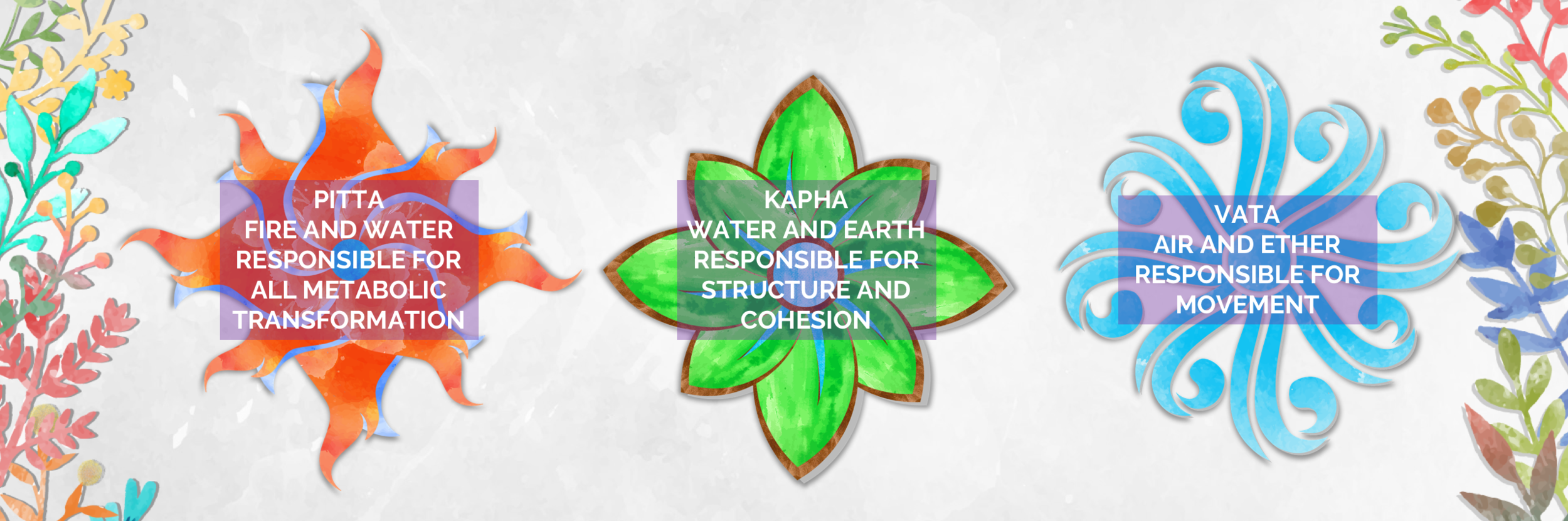
You are born with a constitution (Prakriti), a unique combination of these doshas. It is your balanced state
When doshas are out of balance (Vikriti), it is a deviation from your original constitution, disorder and disease appear
Following this paradigm, a holistic and individualized plan is the main approach in Ayurveda.
Finding the root cause of ill health rather than treating or suppressing symptoms = determining the imbalance of doshas
Restoring balance and harmonizing “mind-body’’ constitution = finding your ‘original’ health
Individualized treatment as no two ailments manifest in the same way in people

“Ancient Wisdom, Modern Concept”
Modern science with its new findings can only explain now some of the main principles and insights of Ayurveda.
“BODY-MIND” interconnection of health
“GUT HEALTH” (gut micro-biome) as the doorway to immunity and psychological health
“DNA profiling” for tailor- made treatment.
“CIRCADIAN MEDICINE” eating, sleeping according to basic laws of nature. ‘When out of sync with circadian rhythm the gut microbiome are significantly altered’ John Douillard.
The doshic theory explains why health and ill health are individual and therefore require a tailor made approach.
Agni - the digestive fire is the root cause of health and defacto ill-health. So all physical and psychological disorders and disease derive from a dysfunction at that level.
Ama – the undigested and unabsorb foods accumulates in the gut and other channels, and becomes toxic. Toxins will travel and clog predisposed weakness in the body, further weakening organs thus, giving rise to ailments ranging from IBS to arthritis to psychological issues. Repressed emotions, just like undigested food, can also result in creating ama.
Enhancing the digestive power (agni) follows an in-depth protocol until its optimal function is achieved.
In line with the dosha theory, the best nutritional practices take into consideration your constitutional type, your present condition, the level of your activity and environmental factors.
“One’s man meat is another man’s poison’ illustrates the bespoke and holistic view of Ayurvedic nutrition, demarking itself from modern ‘one size fits all’ health and dietary guidelines.
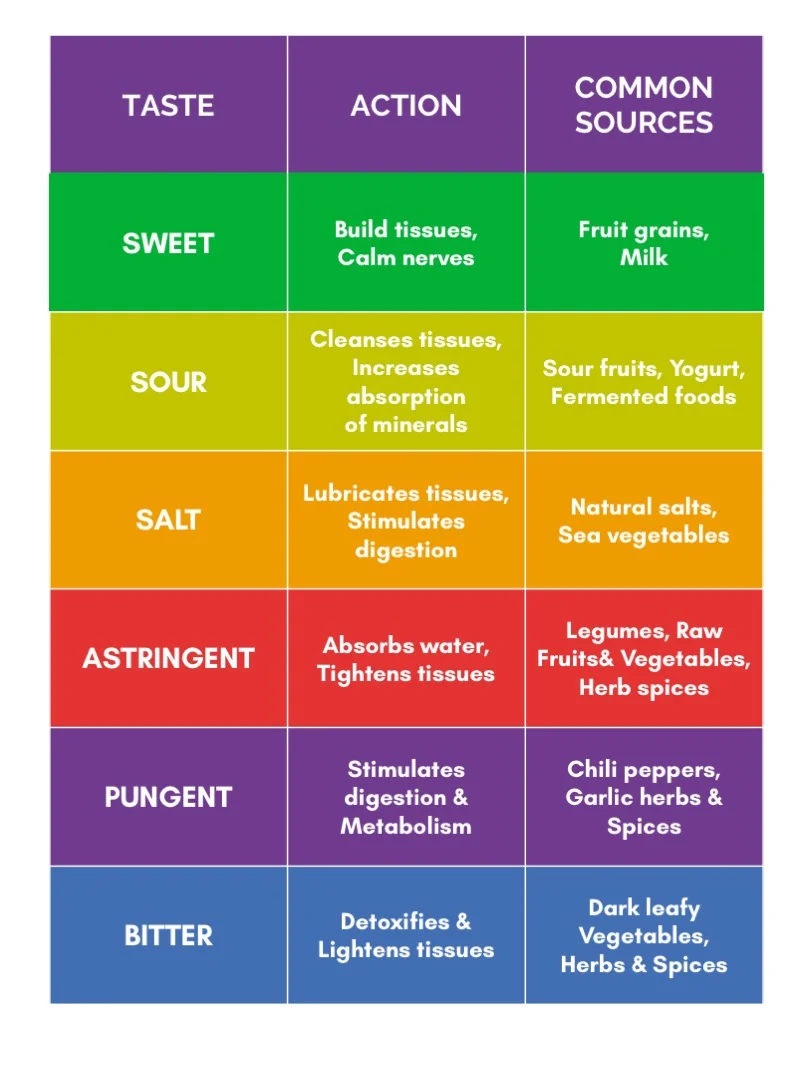
Understanding the concept of taste will also provide key understanding in how food and herbs affect the dynamics of our own physiology and psychology. It recognizes six tastes by which all food is grouped: sweet, sour, salty, astringent, pungent and astringent. A balanced meal will have all six tastes – the proportion of each based to your ‘doshic nature’& imbalance- will provide optimal nourishment and satisfaction.
In Ayurveda taste is quite literally the natural guide to proper nutrition. Our tastesbuds unlock the nutritive value of food and provide the initial spark to the entire digestive process – together with other senses they will trigger the production of different enzymes to ensure effective digestion.
“Balancing your mind-body type through taste”
Although all six tastes must be present in each meal, each dosha will be balanced more with:
Vata: sweet, salty and sour – favour warm & nourishing food
Pitta: sweet, astringent & bitter- favour cooling, dry food
Kapha: pungent, bitter & astringent - favour warm, light food